First and second line desk
Agents take the opening message, work the common cases, and close what can be closed. The second line reproduces harder issues before anyone escalates.


Fit
Support goes wrong when the fit is wrong. So here is the boundary, before the selling part.
This is built for companies that sell to other businesses and answer for a product. The buyer paid, the buyer expects a reply, and someone on your side is quietly absorbing that.
It is not office IT for your own staff. We do not reset employee passwords, manage company laptops, or look after your internal network.
We also turn down products where nobody on your side can answer our questions. A first line of support with no source of truth is just confident guessing.
If your volume is consumer scale, thousands of tickets a day, we are the wrong shape for you. B2B technical support is a lower volume job with higher stakes per ticket, and we staff it that way.
The situation
Almost nobody decides to run support badly. It just never gets owned, and the cost turns up somewhere else.
Support sits in a mailbox three people watch. Everyone assumes someone else has replied.
Your best developer answers a login question at eleven at night. The release slips a day.
A customer in another region writes at nine and hears back tomorrow afternoon. They notice every time.
One issue stays open for weeks. It gets quoted back to you in the renewal call.
None of this shows up on a dashboard. It shows up as slower releases and quieter customers.
Scope of work
Six parts, and they only work together. A desk without a written escalation rule just moves the interruption around.
Agents take the opening message, work the common cases, and close what can be closed. The second line reproduces harder issues before anyone escalates.
Queues, routing rules, tags, and saved replies set up inside your tool. Zendesk, Freshdesk, HubSpot, or Jira Service Management, whichever one you run.
A written rule for what reaches your engineers. What the ticket must carry, who owns it next, and how fast it has to move.
Every repeat question becomes a written answer. The article then handles the next customer before they open a ticket.
We agree the windows you need held. Early mornings for Europe, evenings for the Americas, weekends where your contract promises them.
A short report each month. Volume, response times, repeat causes, and the product fixes that would delete whole ticket types.
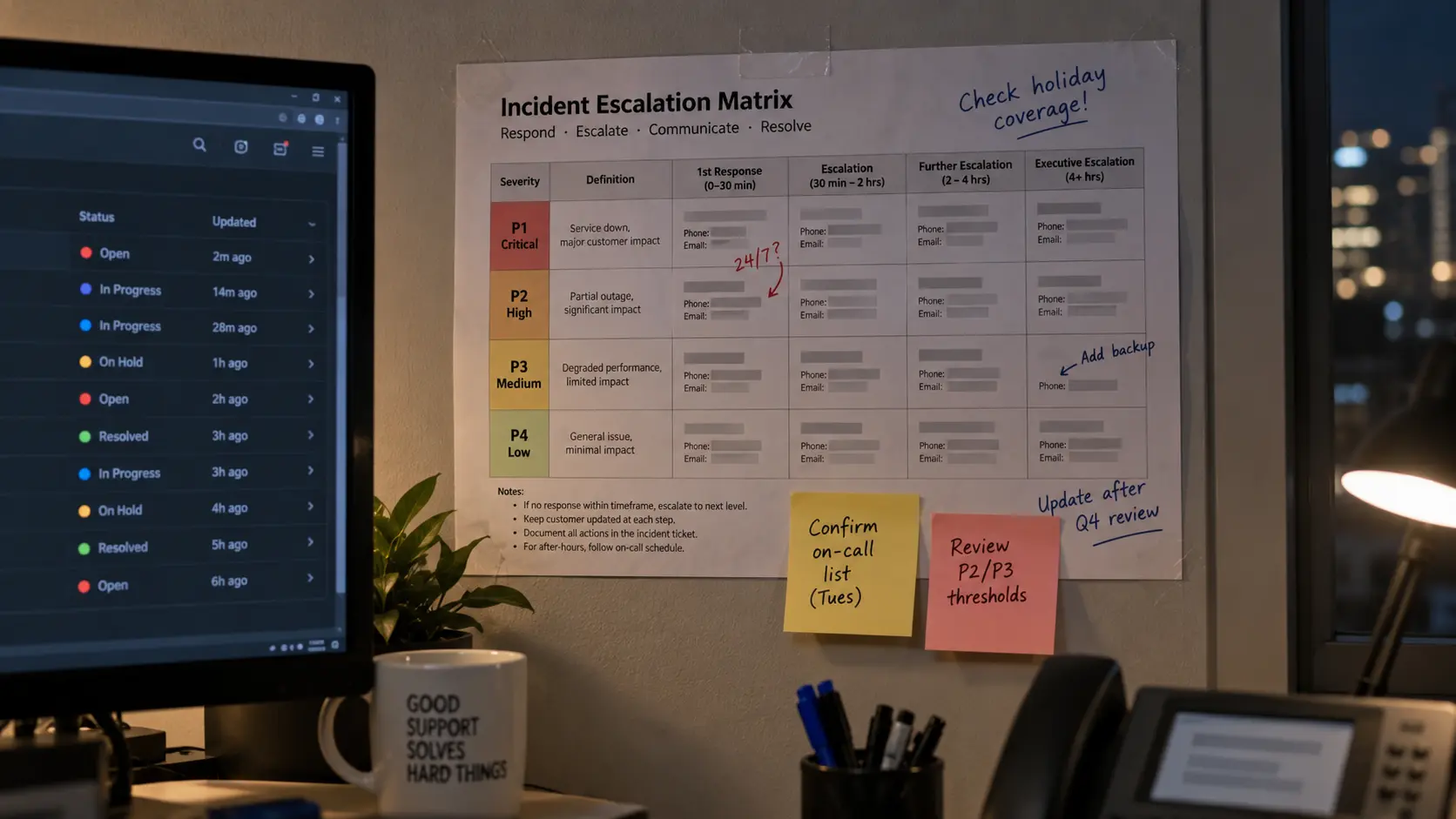
Send us last month's ticket export. We will show you which issues should never have reached a person.
Book a Strategy Call →The process
Nobody hands a stranger their customers on day one. The first month is built to earn it.
We take read access to your product, your ticket history, and your internal notes. Then we read the last ninety days of tickets and group them by cause, not by subject line.
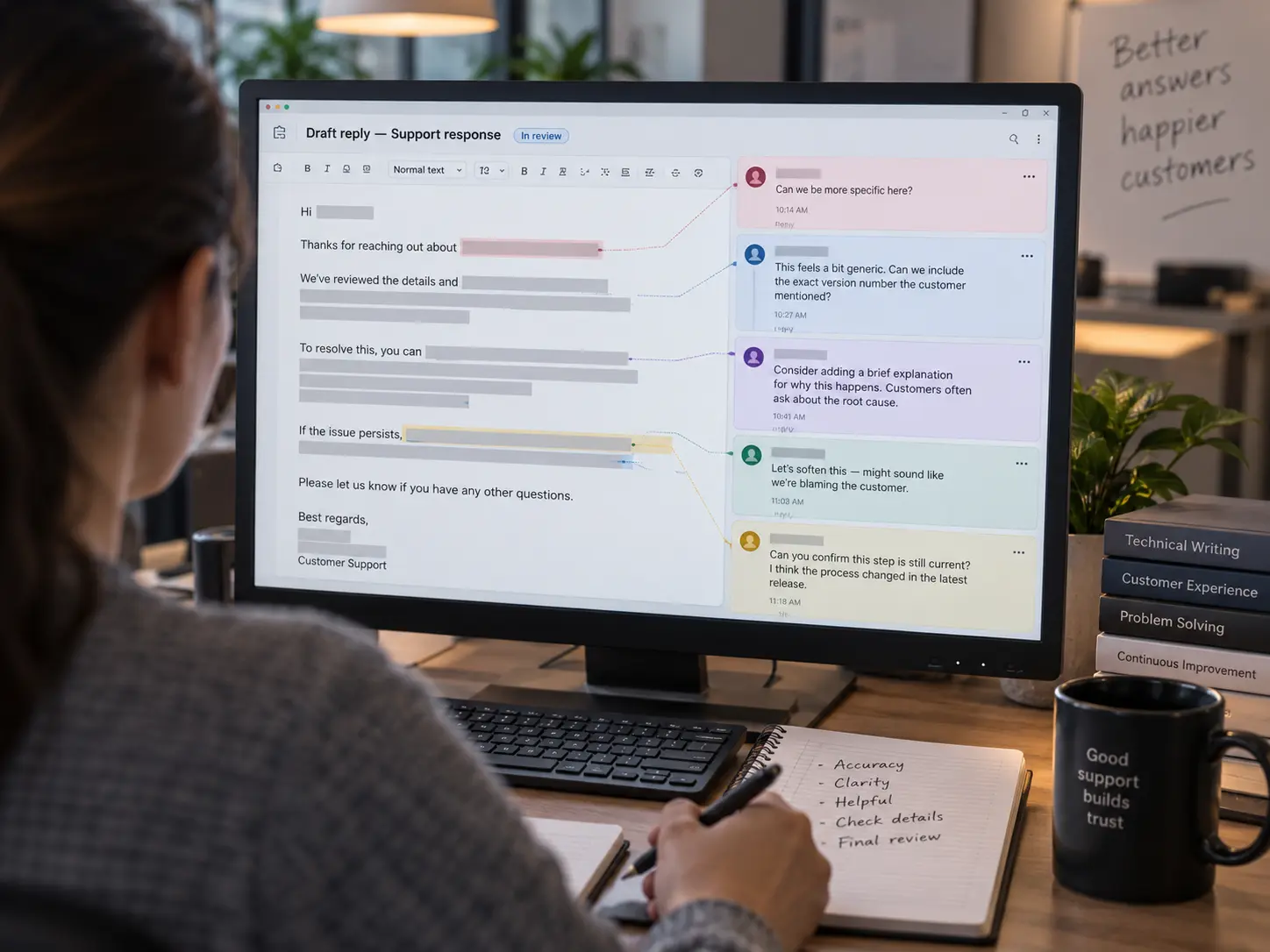
We write answers to your most common questions. Your team marks up every one of them. That markup pass is where the accuracy actually comes from.
We answer real tickets while your team checks each reply before it goes out. The checking stops when it stops finding problems.
We hold the queue in the agreed hours. Once a month we sit down over volume, repeat causes, and what the gate let through.
Most tickets never reach the gate. The few that do arrive with the groundwork already done, which is why your engineers stop dreading them.
Deliverables
Things you can open, read, and keep. Not a description of a service.
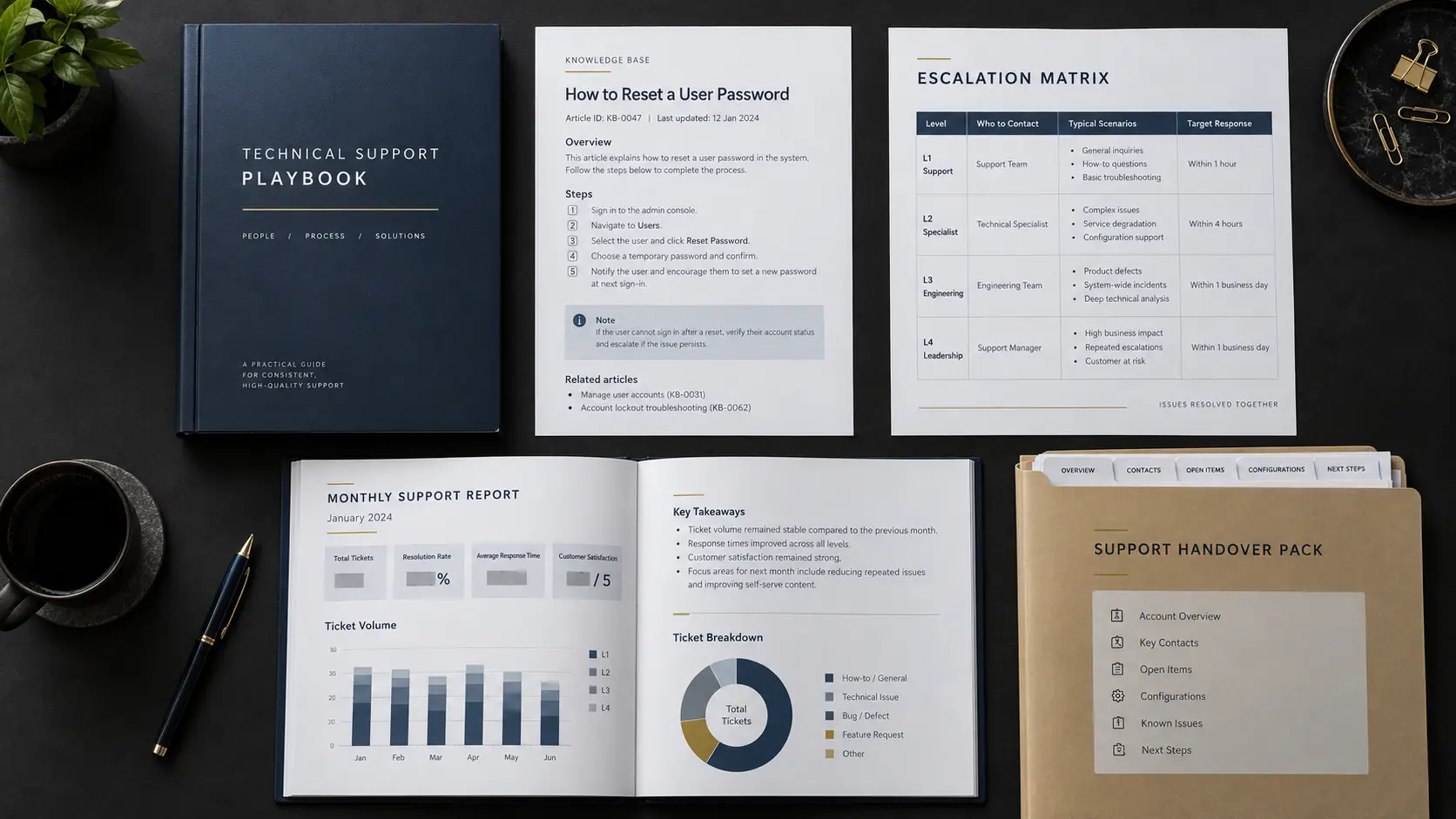
The handover pack matters most. If you hire a support lead next year, they should not begin with an empty page.
Examples of past work are available on request, so get in touch and we will send work relevant to your market.
The Assured Outreach Model
The Assured Outreach Model is how we sell outreach work. Support work is held to the same shape.
We agree the targets in writing before the first ticket. Response time, cover windows, and what counts as a resolved case. Nothing on that list gets decided after the fact.
Miss the agreed response targets and we keep covering the desk at no added service charge.
Common questions
They learn it in the first two weeks, then keep learning. We start from your ticket history and your notes, then your team marks up our draft answers. Accuracy comes out of that markup pass, not out of a briefing call.
Yours. Your ticket history, your customer records, and your reporting all stay in one place. If you do not have a help desk yet, we set one up in your account rather than ours.
They pass the gate to your engineers. By then the issue is reproduced, the account and version are attached, and the obvious causes are ruled out. That is the difference between an escalation and a forwarded email.
Most of the first month is setup and checking. We answer live tickets from week three, and the first report tells you exactly where the queue stands. We would rather show you that than promise a number now.
Three things. The hours you need covered, your ticket volume, and how deep the second line has to go on your product. We do not publish rates, because a weekend window and a full weekday desk are not the same job.
The next step
Bring one month of tickets to the call. We will tell you what a staffed desk would have closed without you, and what your product should fix instead.