GTM strategy services start with market definition and your ideal customer profile
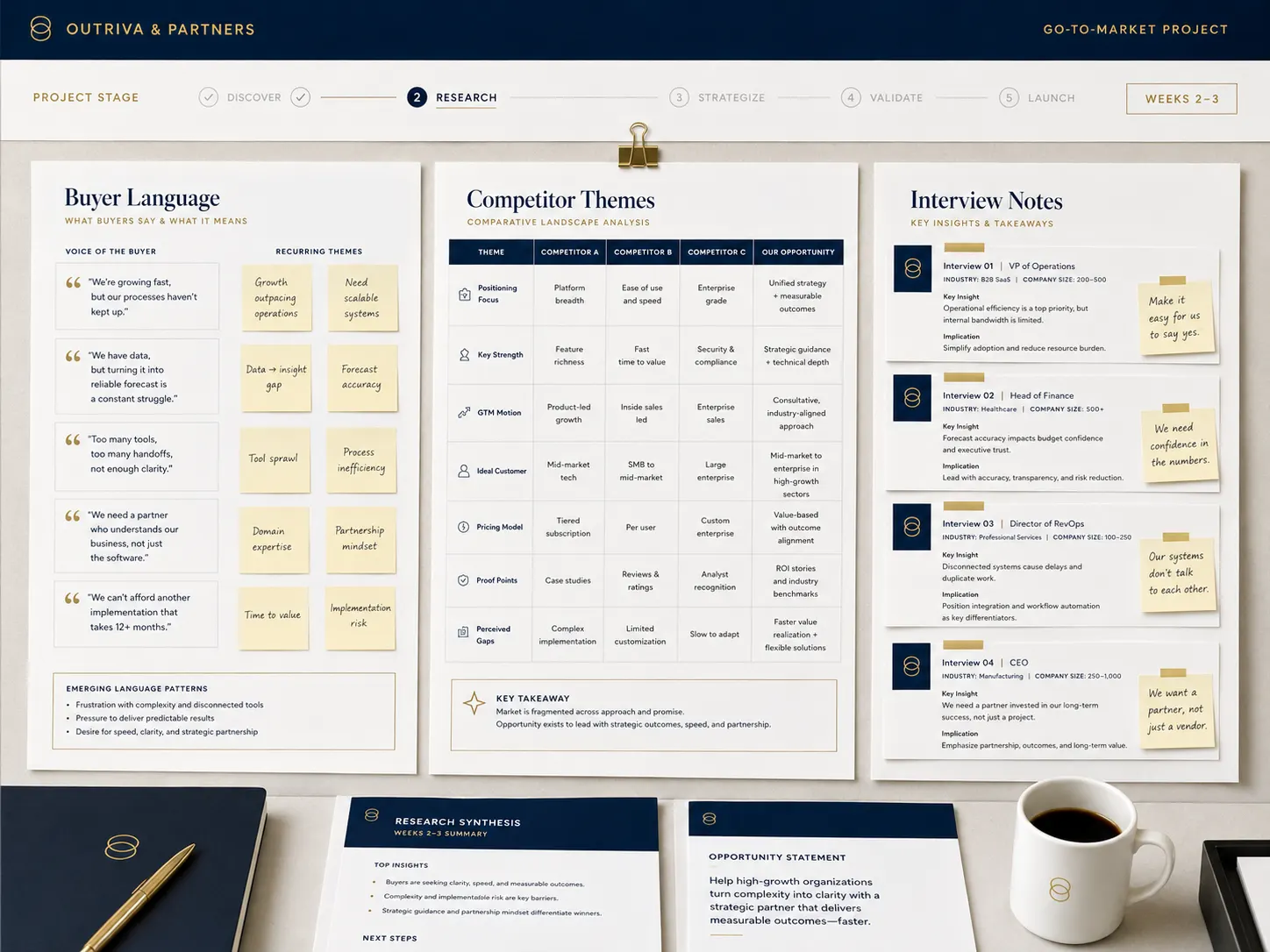
Market definition answers two questions. Who should you sell to, and how many of those buyers exist? We build an ideal customer profile (ICP), a description of the companies most likely to buy. We size the total addressable market (TAM), apply market segmentation, then name the buyer persona and the wider buying committee behind each deal. Our GTM strategy services use that definition as the reference for every later choice.
Positioning and messaging
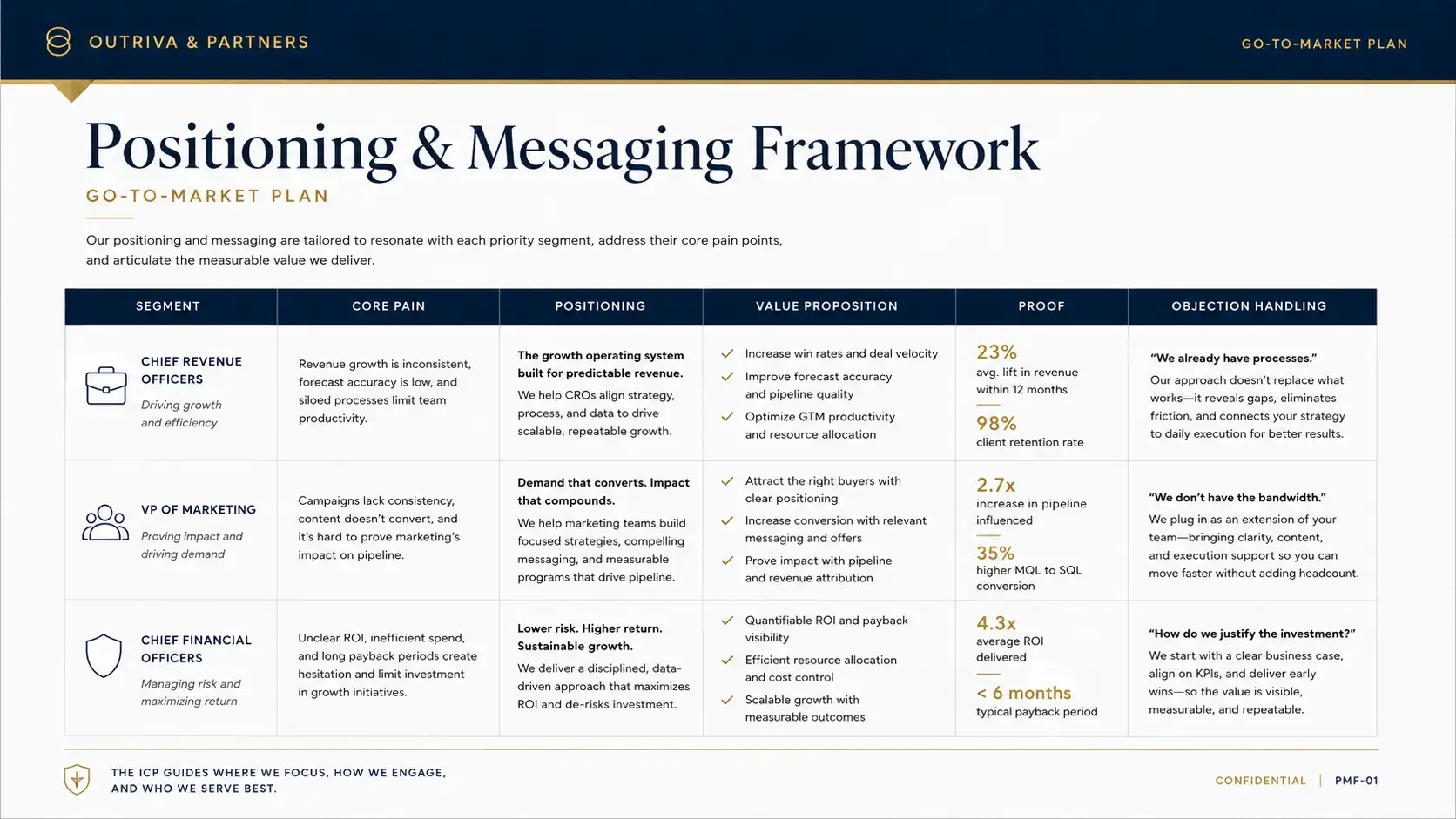
Positioning is the place your product holds in a buyer's mind next to the alternatives. We define that first, then write the messaging framework around it. The framework holds your value proposition, the proof behind each claim, and your competitive differentiation in words a buyer recognises. You get a version for each segment, not one message for everyone.
Channel and sales motion selection
We pick the routes to market that match your deal size and your buyer's process. Options include outbound (you contact buyers first), inbound (they find you), and product-led growth, where free use of the product does the selling. Partner-led selling, demand generation and account-based marketing (ABM) are the other routes we assess. We choose two or three and say why, rather than trying everything.
Offer and pricing design
Pricing and packaging decide how easy your product is to buy. We look at what you sell as a unit, which tiers you offer, and where the first paid step sits. We compare your prices with the alternatives your buyers already consider. Then we check the model against your customer acquisition cost (CAC), so it holds once sales and marketing costs are in.
Pipeline model and targets
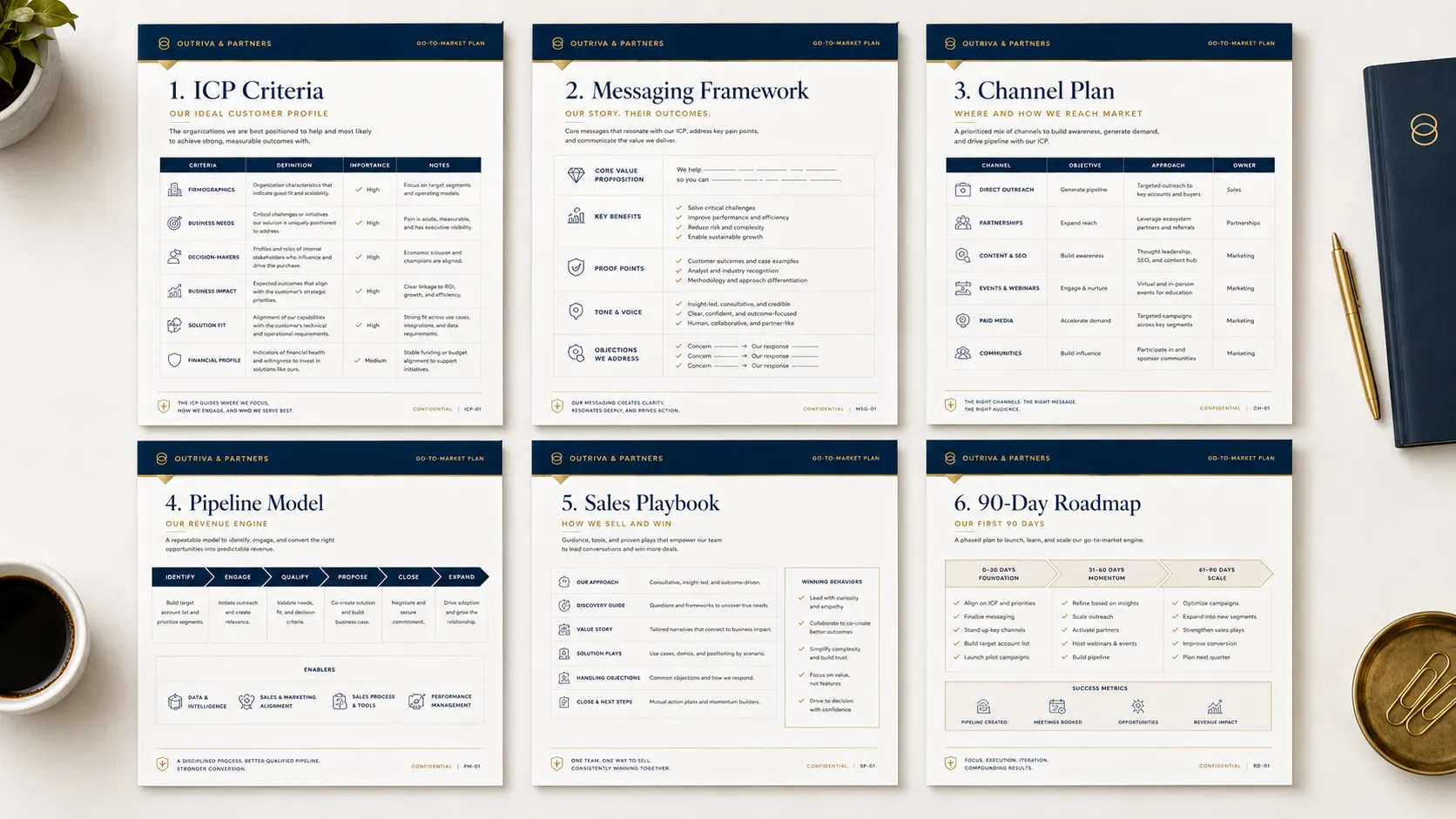
You get a simple model that connects activity to revenue. It works backwards from your revenue goal through win rate, average deal value and sales cycle length, and shows how many conversations each stage needs. The model also sets the standard for lead qualification, so your team agrees what counts as a real opportunity.
90-day execution roadmap
The plan ends with a dated roadmap for the first 90 days. It names the target accounts, the channels in play, the sales enablement material, and the owner of each step. Weeks one to four cover setup and list building. Weeks five to twelve cover live outreach and adjustment.