Partner profile and tiering
We write down what a good partner looks like before anyone is contacted. Size, market, service overlap, and the accounts they already hold. Tiers decide how much research each name gets.


Fit
A partner takes a risk when they introduce you. They put their own client relationship behind your name.
That is why the bar sits higher here than it does for direct outreach. A buyer can ignore a bad message. A partner has to defend the referral afterward.
So we will say no when the fit is not there. A vague offer or an untested delivery process stalls at the first partner call, and no amount of message volume fixes that.
This is the wrong channel if you need booked calls inside the quarter and have nothing else running. Direct outreach gets there faster, and we will tell you so on the call.
The situation
Most companies already have partners. Few have partners that produce anything you could put in a forecast.
Partnerships sit with a founder who is also selling, hiring, and delivering. Follow-up stops the week things get busy.
The first call ends with a promise to stay in touch. Neither side wrote down what they would actually do next.
The pitch explains what you want from them. It never explains what the partner earns, saves, or wins.
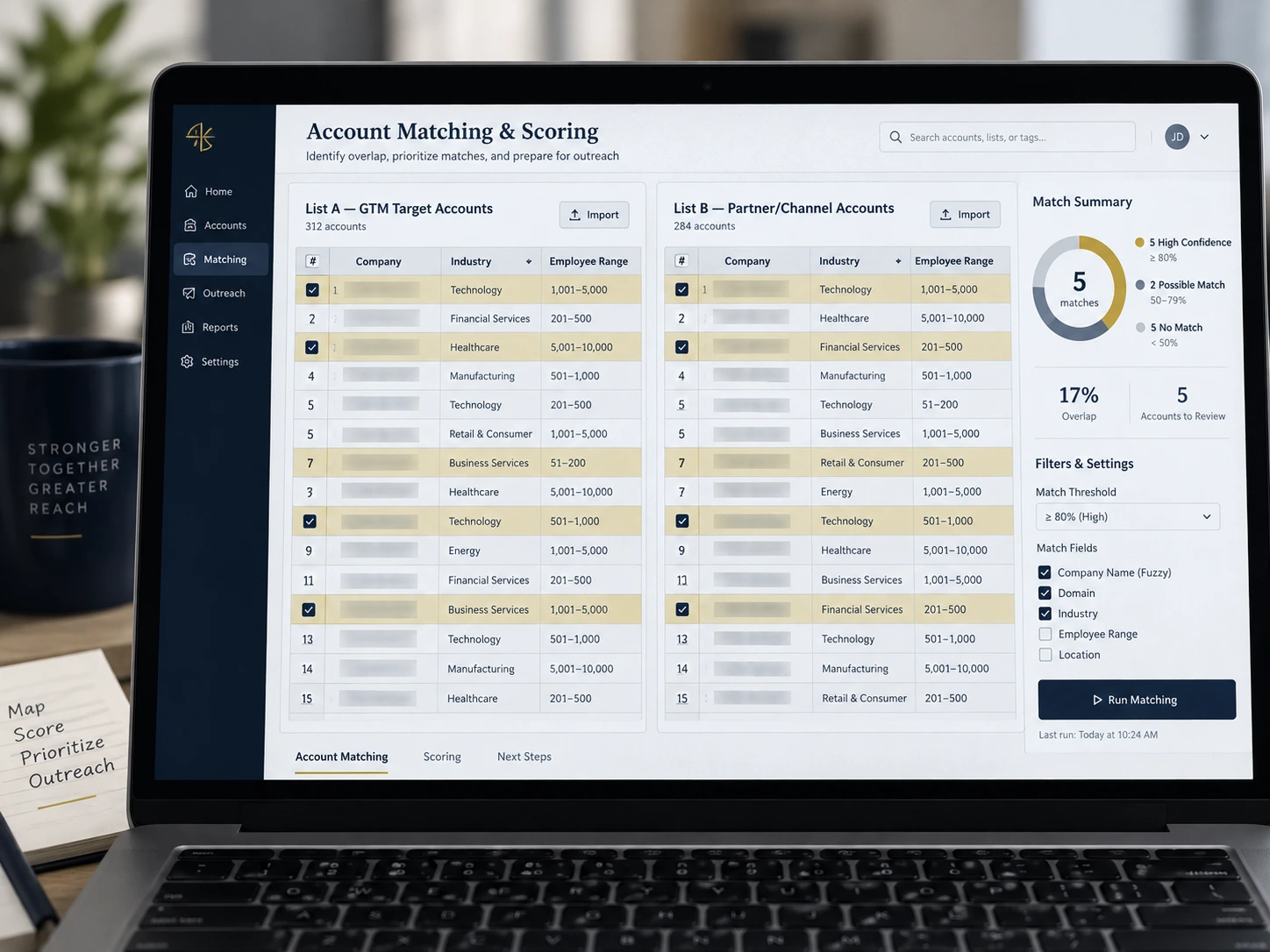
Neither side knows which accounts they hold in common. Introductions then depend on memory rather than a list.
None of these are relationship problems. They are process problems, and process can be fixed.
Scope of work
We write down what a good partner looks like before anyone is contacted. Size, market, service overlap, and the accounts they already hold. Tiers decide how much research each name gets.
The target list is built from Sales Navigator, Apollo, association directories, and event lists. Then we map which of their clients match your ideal customer profile (ICP). That overlap decides the order of contact.
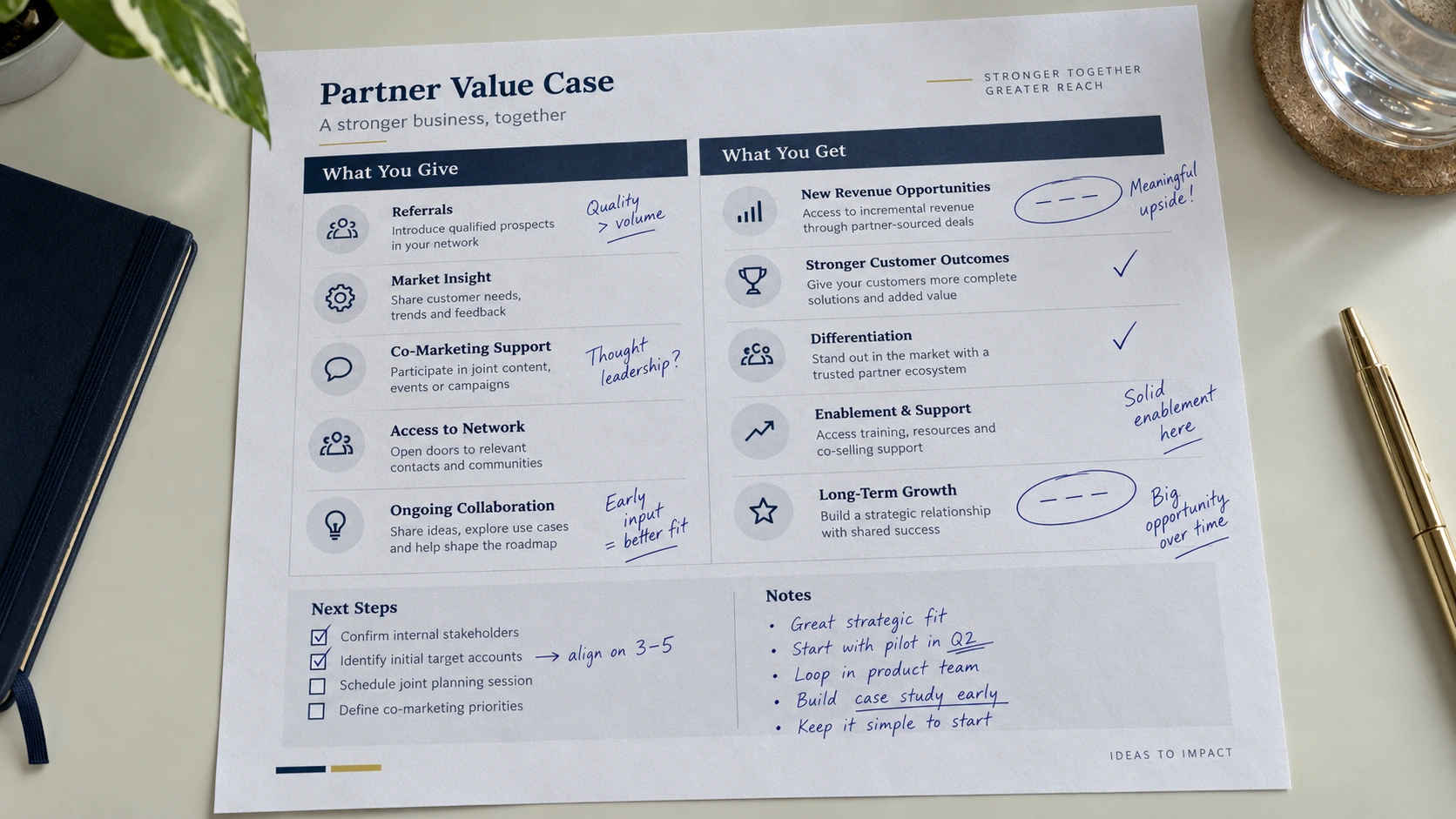
Each tier gets a short written case for why the partnership pays them. Referral economics, joint delivery, or access to a market they want next. This is the part most partner pitches skip.
Outreach runs across LinkedIn, email, and WhatsApp where the region supports it. Messages go to the person who owns partnerships, not a shared inbox. Sequences are rewritten when replies dry up.
We handle scheduling, the briefing note before each call, and the follow-up after it. You leave with a written scope of what each side commits to. Nothing rests on a verbal promise.
A signature is the start, not the result. We track first introductions and flag partners who have sent nothing. Quiet ones get re-engaged or replaced.
Send us your current partner list. We will show you where the account overlap actually sits.
Book a Strategy Call →The process
Nothing goes out until the target list and the value case are signed off by you. That takes the first two weeks in most cases.
We agree the partner profile, the tiers, and the KPIs. Qualification criteria go in writing before a single message is sent.
We build the list and score each candidate on account overlap. Tier one names get individual research. Everyone else gets a lighter approach.
Sequences go live across the agreed channels. You get a weekly report of contacts, replies, and calls booked. Messages that fail to land are rewritten, not repeated.
Calls get booked, briefed, and followed up. Terms are drafted for the partners who progress. You join the calls that matter and skip the rest.
We check whether signed partners send anything at all. Silence gets treated as a problem to solve, not a result to accept.
The longest bar loses. Contact order follows the size of the shared account overlap, not the size of the partner. The biggest logo on the list is often the wrong first call.
Deliverables
Everything is yours to keep. If we stop working together, the list and the messaging stay with you.
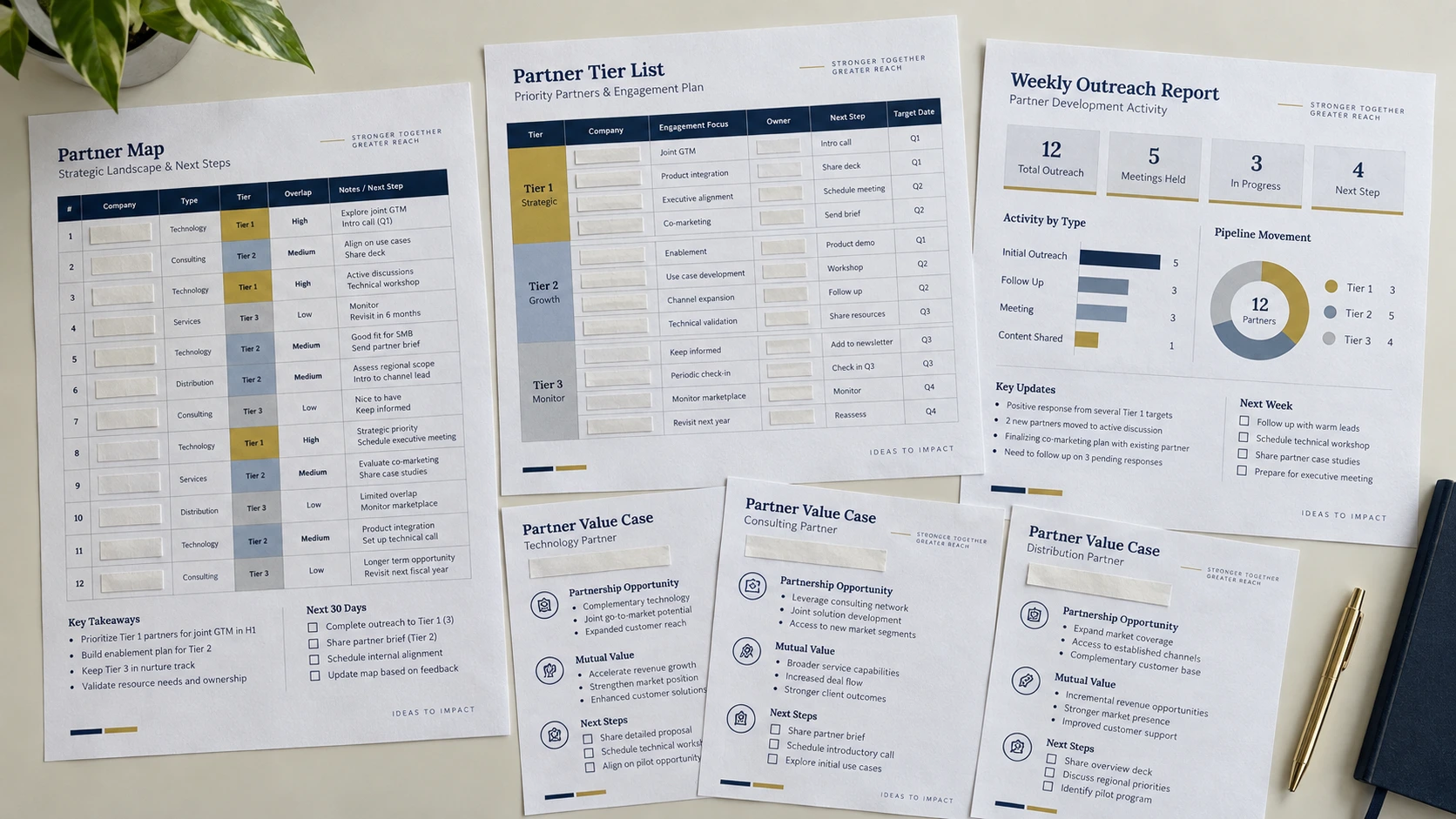
None of it is locked inside a tool you cannot open. The files sit in your drive and the contacts sit in your CRM.
Examples of past work are available on request, so get in touch and we will send work relevant to your market.
The Assured Outreach Model
Partnership work is slow enough that you deserve a written commitment, not a promise to review things later.
So the criteria come first. We agree which partners count, what a qualified conversation looks like, and what the period has to produce.
If the agreed KPIs are not met, we keep working at no additional service charge.
Common questions
Expect months rather than weeks. First conversations usually happen inside the first six weeks. Revenue then depends on the partner's own sales cycle, which sits outside our control and outside yours.
Lead generation targets the buyer directly. Partnership outreach targets the companies that already hold trust with that buyer. The volume is far lower and each conversation is worth more.
That is usually where we start. Waking a signed partner is faster than sourcing a new one, because the introduction and the paperwork already exist. We rebuild the value case and go back to them.
Yours. We work inside your profiles and your domains, so the partner only ever deals with your brand. Handover of the relationship happens as soon as terms are signed.
Fewer than most people expect. Tier one candidates get individual research and a value case written for them alone. Sending the same note to two hundred firms is how partner outreach earns its bad name.
The next step
Bring your target market and any partners you already work with. On the call we will say whether B2B partnership outreach is the right channel for you, or whether something else gets there faster.