Deduplication and merge rules
We find duplicate contacts, companies and deals, then merge them under rules you approve. The rules state which record wins each field, so every merge is predictable.

Fit
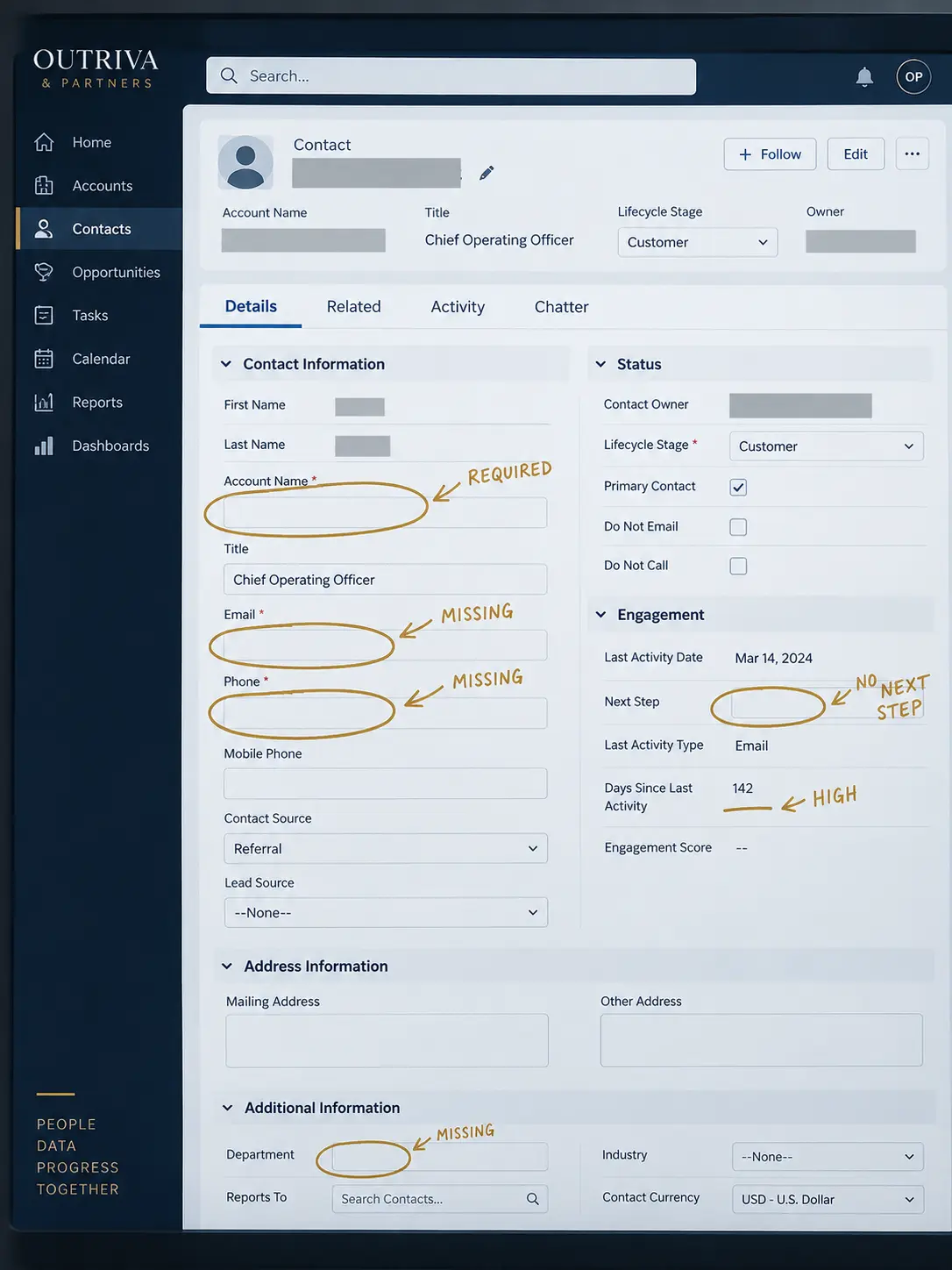
CRM maintenance suits teams who already own the system and have quietly started to distrust what it tells them.
Most clients did nothing wrong. They grew, added tools, imported lists, and the database absorbed all of it.
This is not Revenue Operations (RevOps). RevOps designs the stages, the process and the reporting model. Maintenance keeps the data inside that design correct.
We are the wrong fit in two cases. If you have no CRM yet, you need selection and setup before maintenance. If you want one cleanup with no cycle behind it, the data will drift back.
The situation
Bad data rarely announces itself. It arrives as small frictions that slowly change how the team works.
Sales works one record while marketing works another. Both look active, and neither carries the full history.
Deals sit in a stage nobody has touched in weeks. The forecast reads as pipeline when it is really a queue of stalled work.
An outbound sequence goes out and part of it lands nowhere. The list was correct when it was built, months ago.
Reps track the real deals in a private sheet. The CRM turns into a reporting chore rather than a working tool.
None of these are software problems. They are data hygiene problems, and they compound every month they are left alone.
Scope of work
Scope is set object by object and system by system. Nothing below starts before the rules are agreed in writing.
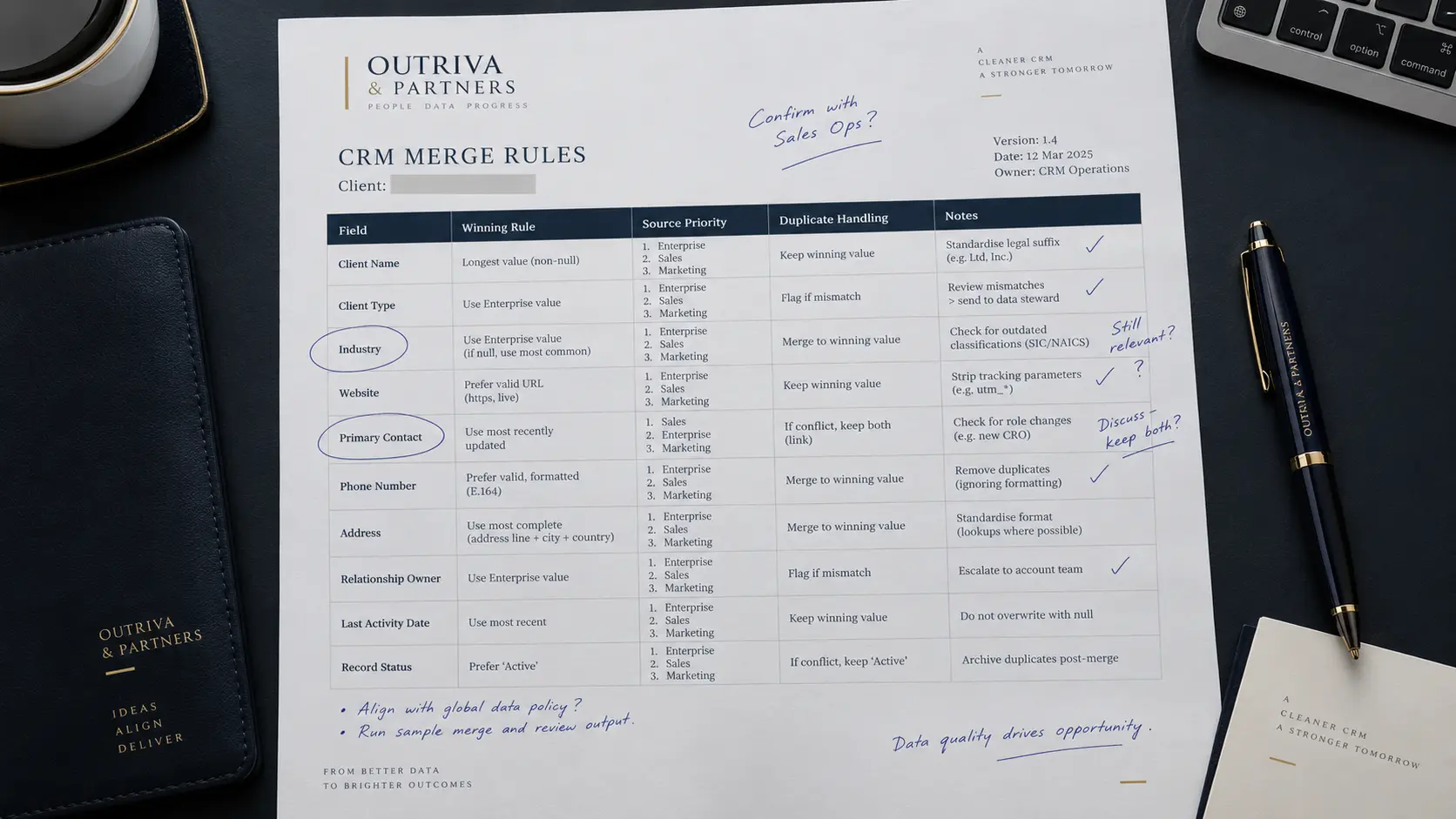
We find duplicate contacts, companies and deals, then merge them under rules you approve. The rules state which record wins each field, so every merge is predictable.
Emails, phone numbers and domains are checked for format and status. Missing company fields are filled from a source we name in the report.
Every field gets an owner, a plain meaning and a reason to exist. Fields nobody uses are archived, so the record stays readable.
Stages get written exit criteria, then records are tested against them. Deals with no activity move to a review queue instead of padding the forecast.
Your forms, outreach tools and calendar all write into the CRM. We watch those write paths and catch a broken sync before it fills the database with junk.
Dashboards break quietly when a field is renamed or a stage is added. We keep each report pointing at the fields it was built on.
Send us an export of one object. We will send back a written list of what is wrong with it.
Book a Strategy Call →The process
CRM maintenance starts with an audit and a first cleanup pass. After that it settles into a cycle you can plan around.
We export every object and count what is actually in there. You get a written list of defects before anything is changed.
We agree merge rules, required fields and stage exit criteria in writing. Nothing is merged or retired until you sign off the rules.
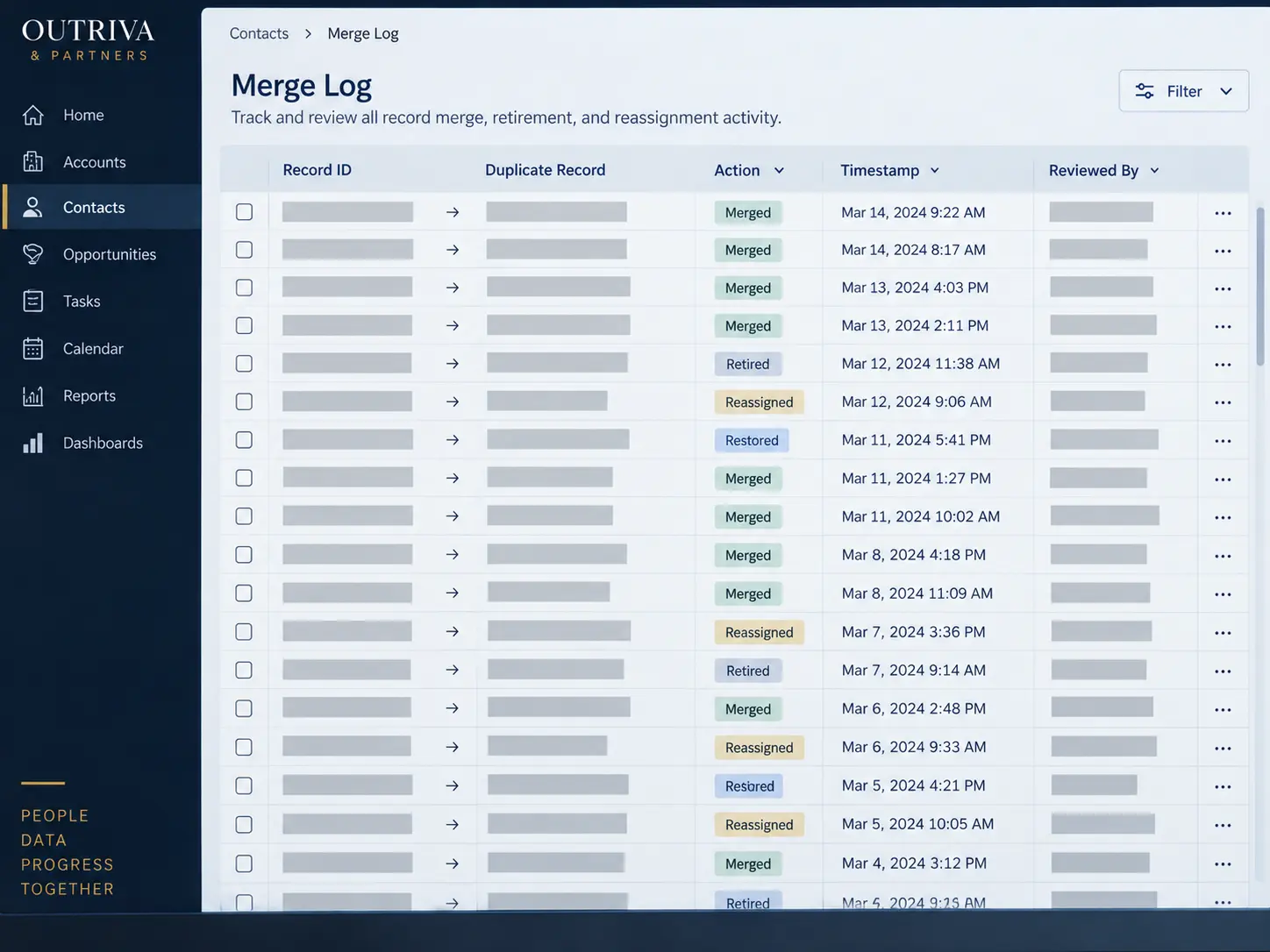
Duplicates merge, dead records retire, and missing fields are filled. Every change is logged, so any record can be traced back.
New records are tested against the same rules. Sync errors and broken dashboards are caught in the same pass.
Your sales process changes, so the field dictionary has to change with it. Rules that no longer match how you sell get rewritten.
Each write path damages a field you can name in advance. Maintenance is the set of rules that catches each one before it reaches a report.
Deliverables
Everything we produce sits inside your systems and under your name. Nothing lives in a tool only we can open.
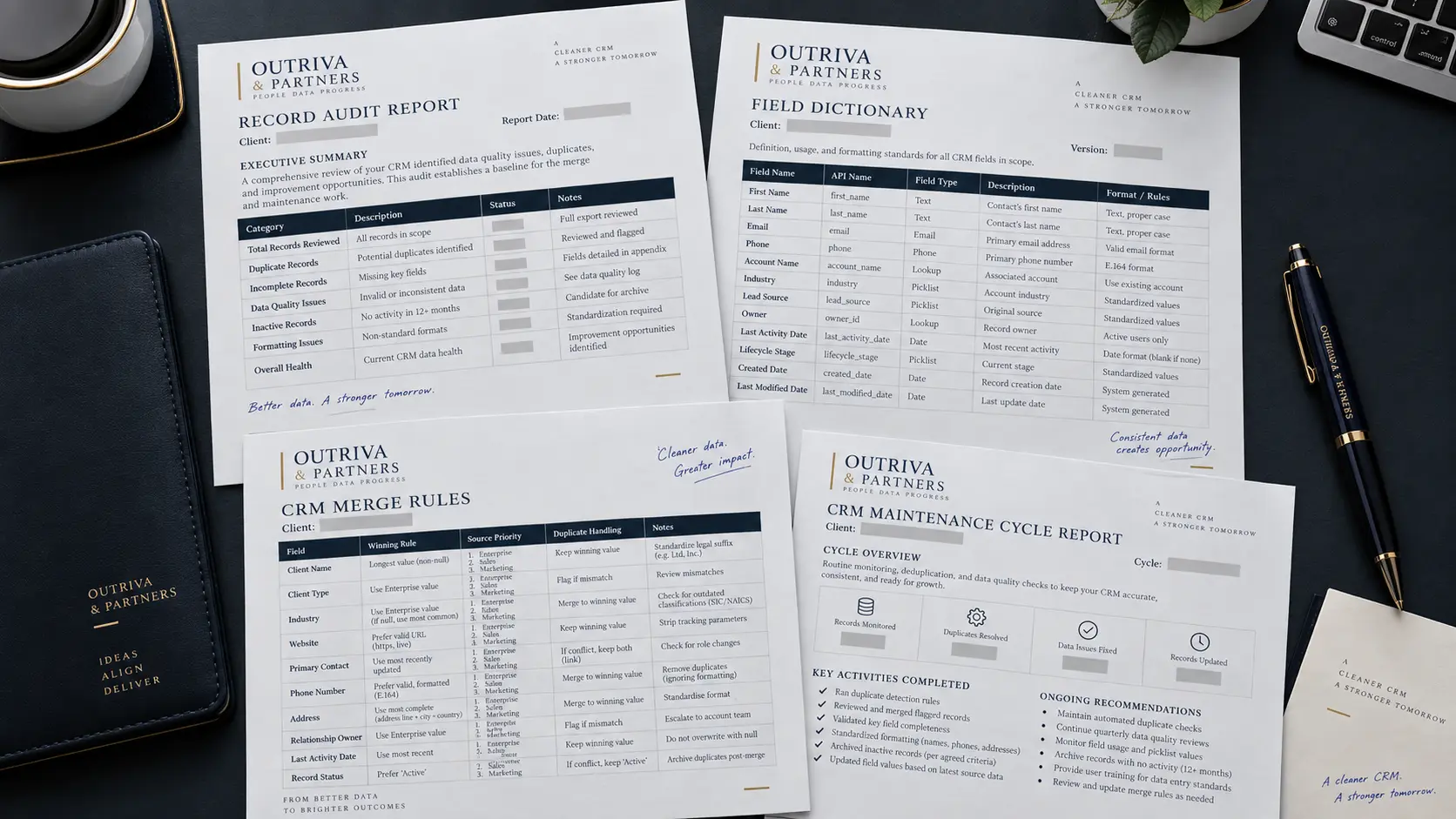
If the engagement ends, the rules and the dictionary stay with you. Your admin can run the same cycle without us.
Examples of past work are available on request, so get in touch and we will send work relevant to your market.
The Assured Outreach Model
The model that governs our outreach work governs CRM maintenance too. Quality targets go in writing first, then get reported against.
Data quality is easy to claim and easy to check. We set the criteria with you in counts you can pull from your own CRM, so nobody has to take our word for it.
If the agreed KPIs are not met, we keep working at no additional service charge.
Common questions
We work in HubSpot, Salesforce, Pipedrive, Zoho and several smaller tools. If your CRM has an export and an API, we can maintain it. We work inside your account rather than moving your data somewhere else.
The audit lands in the first week, so you know the scale of the problem quickly. The first cleanup pass usually finishes inside the first month. Larger databases with many write paths take longer, and we say so before starting.
We quote after the audit, once we know the record volume, the number of objects and how many systems write into the CRM. A database with one form and one outreach tool is a different job to one with six integrations. You get the figure in writing before any work begins.
No. Nothing is merged or retired until you have signed off the rules that govern it. Records are archived before they are removed, and every change is written to a log you can export.
No. RevOps decides how your revenue process should work and builds the system around it. CRM maintenance keeps the records inside that system accurate, week after week. Many clients need both, and they run well together.
The next step
Bring one export and the list of reports you have stopped trusting. We will tell you what is fixable, what is not, and what it will take.