Monitoring and repairs
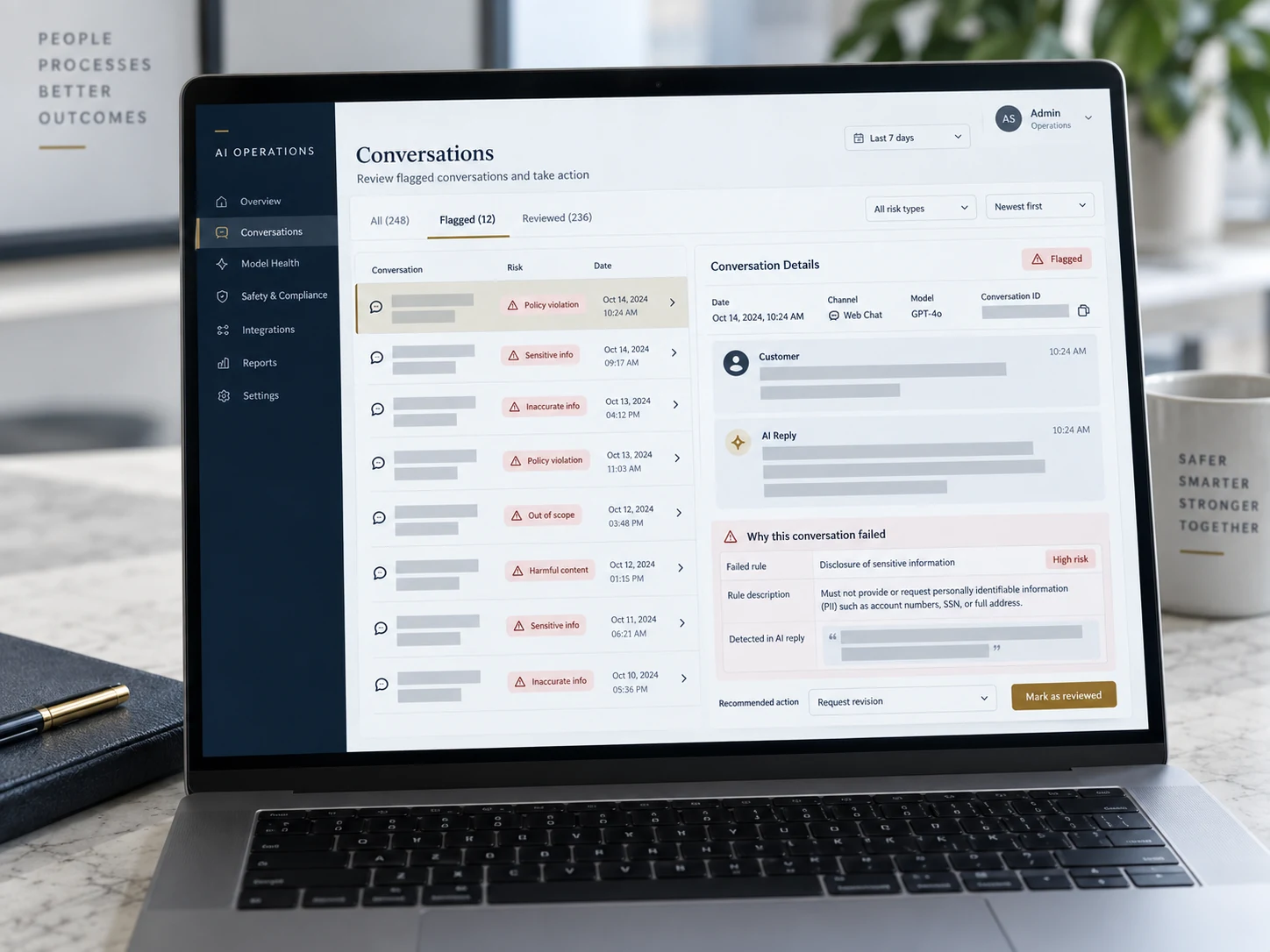
We set up logs and alerts for errors, slow replies and failed tasks. When a connected tool such as your CRM or help desk changes and breaks a workflow, we fix the link. Each fix is written up in the change log.


Who this is for
This service suits a business that runs AI every day but has no one whose job is to look after it.
The system might answer customers, qualify leads or sort documents. What matters is that people depend on it and would notice if it got worse.
It is not the right fit if you are still exploring AI, or if your system is a pilot nobody relies on yet. If you need new features rather than upkeep, that is a build project. We will tell you which one you need.
Signs it needs attention
Most AI problems never show up as an outage. They show up as small changes that nobody is paid to notice.
Providers retire older model versions on their own schedule. The replacement behaves differently, and no one tested your use case against it.
Your prices, products and policies changed, but the documents your AI reads did not. It now answers with confidence using last quarter's facts.
Usage grew, prompts (the written instructions your AI follows) got longer, and no one reads the invoice line by line. Each month costs a little more, and nobody can say why.
The freelancer or employee who set it up has moved on. The prompts, keys and settings now live in their head, or in an account you cannot open.
None of these set off an alarm, which is why they can run for months before anyone looks.
Scope of work
The work falls into six areas. Each runs on a schedule, and each shows up in your monthly report.
We set up logs and alerts for errors, slow replies and failed tasks. When a connected tool such as your CRM or help desk changes and breaks a workflow, we fix the link. Each fix is written up in the change log.
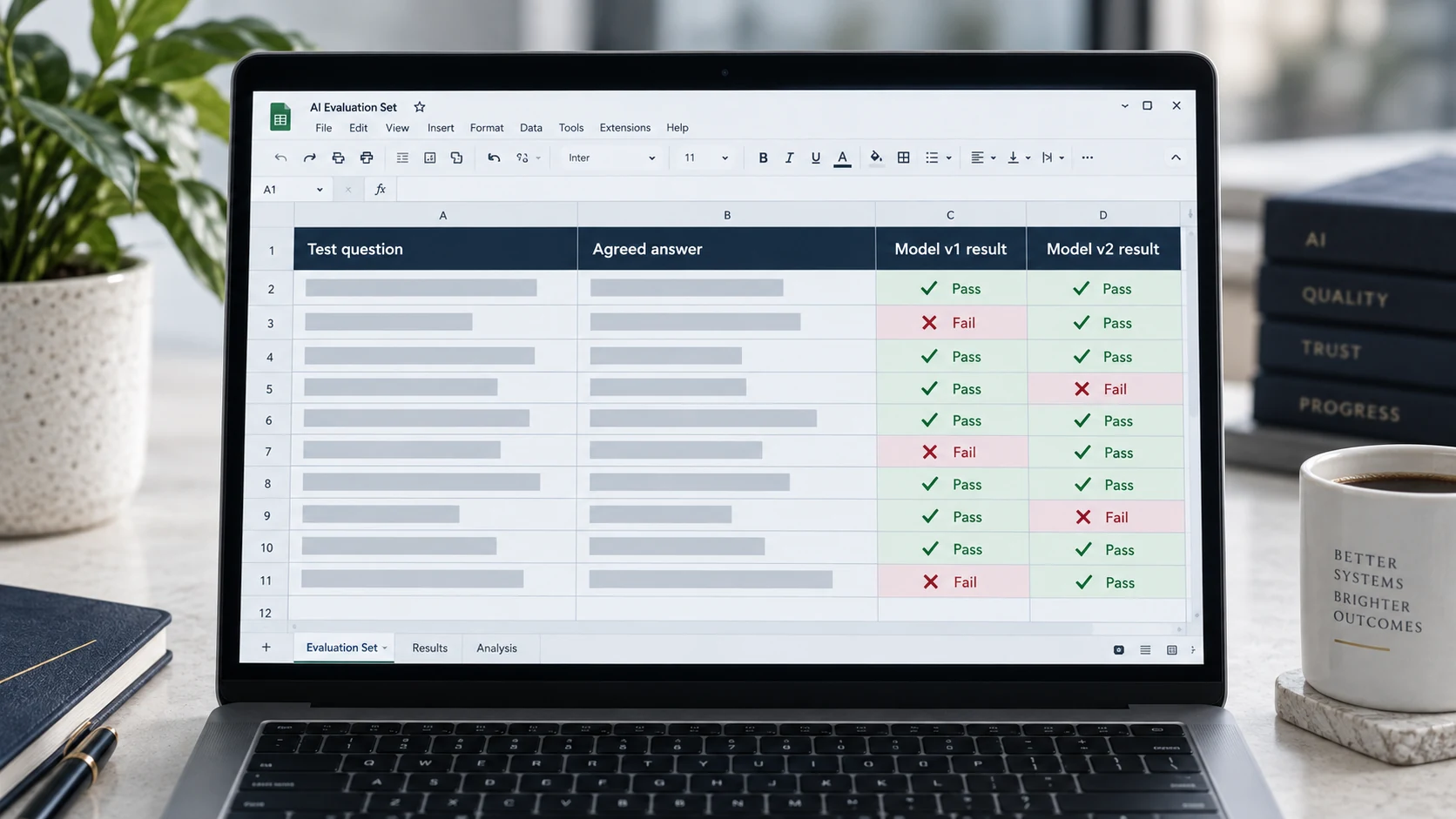
We build an evaluation set: a fixed list of real questions, each with an agreed good answer. It runs after every change and on a regular schedule. When quality drops, you see the exact question that failed.
Providers release new models and retire old ones on their own timetable. We track those notices, test the new version against your evaluation set, and switch only when it holds up.
Your AI is only as current as the instructions and documents behind it. We update prompts when your team wants new behavior, and refresh the knowledge base when your offer or policies change.
Providers bill by usage, so costs move with every longer prompt and busier month. We review spend monthly, cut waste, and send simple tasks to cheaper models where quality holds.
We review who and what can reach the system, and rotate access keys on a schedule. We also test for prompt injection (text written to trick the AI into ignoring its rules). Anything that touches customer data is checked against your own data policy.
Send us one conversation your AI got wrong. We will tell you where we think it broke.
Book a Strategy Call →The process
The first month is spent learning your system and setting a baseline. After that, the work settles into a rhythm you can plan around.
We get access to the model accounts, prompts, logs and connected tools. Then we write down what runs where, who owns it and what it costs.
We pull real questions from your logs and agree with you what a good answer looks like. The first run of the evaluation set shows where the system stands today.
You get a written list of issues, ranked by risk to your customers and your budget. We agree together which fixes come first.
Monitoring runs all the time. Every change passes the evaluation set before release, and new failures from live use become new tests. You get a report on what changed, what broke and what it cost.
We review upcoming provider changes, usage trends and new risks. You decide which changes are worth making in the quarter ahead.
A change that fixes one answer can quietly break another, so nothing ships until every test that passed before still passes.
Deliverables
Good AI system maintenance leaves a paper trail. These are the files and tools you hold, and they stay yours whether or not we keep working together.
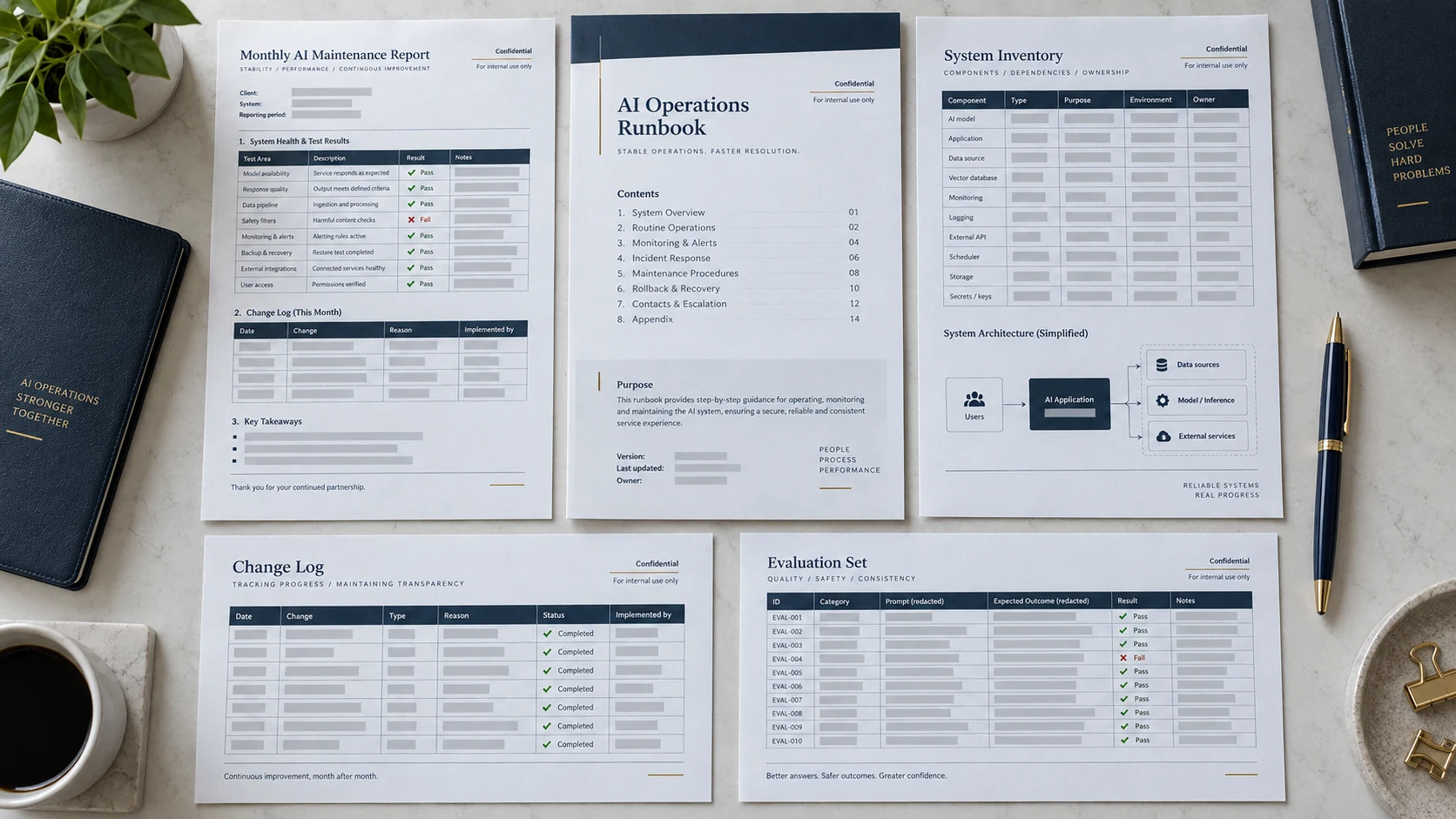
If you ever bring maintenance in house, this set is your handover. Nothing about your system lives only in our heads.
Examples of past work are available on request, so get in touch and we will send work relevant to your market.
Our commitments
Our outreach services carry the Assured Outreach Model. If agreed KPIs are not met in time, work continues at no additional service charge until they are. Maintenance does not fit that shape.
Most AI runs on a provider's servers, outside your control and ours. Anyone who promises it will never fail is guessing. These are the commitments we can keep, and each one is written into your agreement.
What we will not promise: zero errors, or uptime on servers we do not run. When a provider has an outage, we tell you, keep you posted and rerun the evaluation set once it clears.
Common questions
Usually, yes. We start with an audit of the model, the prompts, the connected tools and the accounts behind them. If the system sits inside a closed platform with no admin access, we will tell you there is little to maintain.
No, and be wary of anyone who does. Every AI model makes errors some of the time, and outages at the provider are outside our control. We can promise that every change is tested first, problems get answered within agreed times, and you see the results monthly.
It depends on how many systems you run, how complex they are and how often they change. We quote once we have seen the system, not from a rate card. Model usage fees stay on your own account, billed by your provider directly.
Only what the work requires, agreed in writing before we start. That usually means the model provider account, the system's logs and the tools it connects to. Where your setup allows, we review logs with customer details masked.
Small changes, like a new instruction or an updated document, are part of maintenance. New capabilities, such as a second agent or a new integration, are a separate build project. We scope those on their own, so build work never eats into your maintenance time.
The next step
On a Strategy Call, we ask what the system does, who relies on it and what has changed since launch. You will hear what we would check first, and whether you need outside help at all.