Message architecture
One story, written down. What you sell, the problem it removes, and the words that fit each buyer role.


Fit
B2B sales enablement works on a team that already sells. It sharpens a motion that exists. It does not invent one.
The right moment is when the team has grown past the founder. One person won the first deals on instinct. Now four people are guessing at what that instinct was.
So we look for four things before we take the work on.
There are three cases where we say no. If you have no pipeline yet, you need lead generation first. If nobody has sold the product, you need a go to market plan.
The third is a systems problem in an enablement costume. If the real issue is dirty data, broken stages, or reports nobody trusts, that is revenue operations.
The situation
None of these are training problems. They are symptoms of a story that was never written down.
Every rep tells a slightly different version. Buyers on the same account compare notes, and the story does not hold.
New hires learn by sitting next to someone. What they pick up depends on who that someone was.
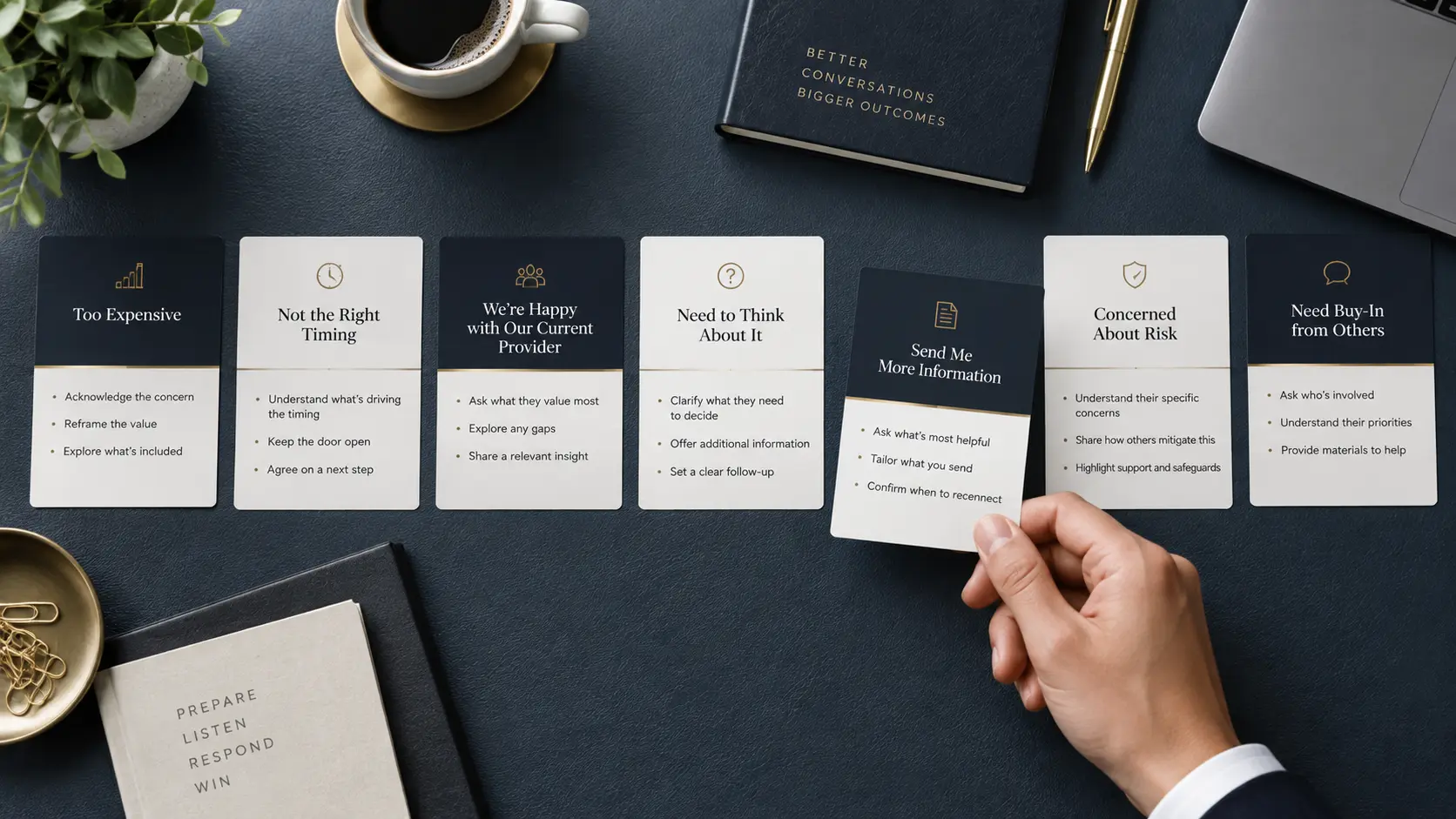
The same objection ends the same stage, month after month. Nobody has written the answer down.
Marketing ships decks and one-pagers. Reps send an old file from their own laptop instead.
The fix is not more material. It is one story, in one place, that a rep can find while the call is still live.
Scope of work
A B2B sales enablement program covers six areas. We rarely run all six at full depth, so we scope the ones your team is missing.
One story, written down. What you sell, the problem it removes, and the words that fit each buyer role.
A structure for the first conversation. The questions, the running order, and the gate a deal must pass to move on.
The files a rep actually sends. One-pagers, proof packs, and a short guide on when each one is used.
Written answers to the objections that keep coming back. Plus how you sit against the names your buyers raise.
What a new rep does in week one, week two, and week four. It ends with a live sign off, not a quiz.
The framework lives in the deal record, not a folder. Stage exit criteria, required fields, and call note templates.
Send us three recorded calls. We will show you where the story breaks.
Book a Strategy Call →The process
Six weeks is the standard shape. A larger team or a second product adds time, and we say so before we start.
We sit in on live calls, read closed deals both ways, and spend a day with your strongest rep. Nothing is written yet.
The message architecture and the call framework go into draft. You mark them up, and we cut anything your reps will not say out loud.
Content, objection cards, competitor sheets, and the ramp plan. All of it written in the words your buyers already use.
Live sessions and role plays with the whole team. Each rep runs the framework end to end before we sign them off.
Fields, stage gates, and a call review rhythm for the managers. Then we hand it over and step back.
The gate sits before the proof, not after it. A deal that cannot pass it goes back to the problem, which is where most stalled pipeline belongs.

Deliverables
Files you own, in formats your team can edit. Nothing sits locked in a portal we control.
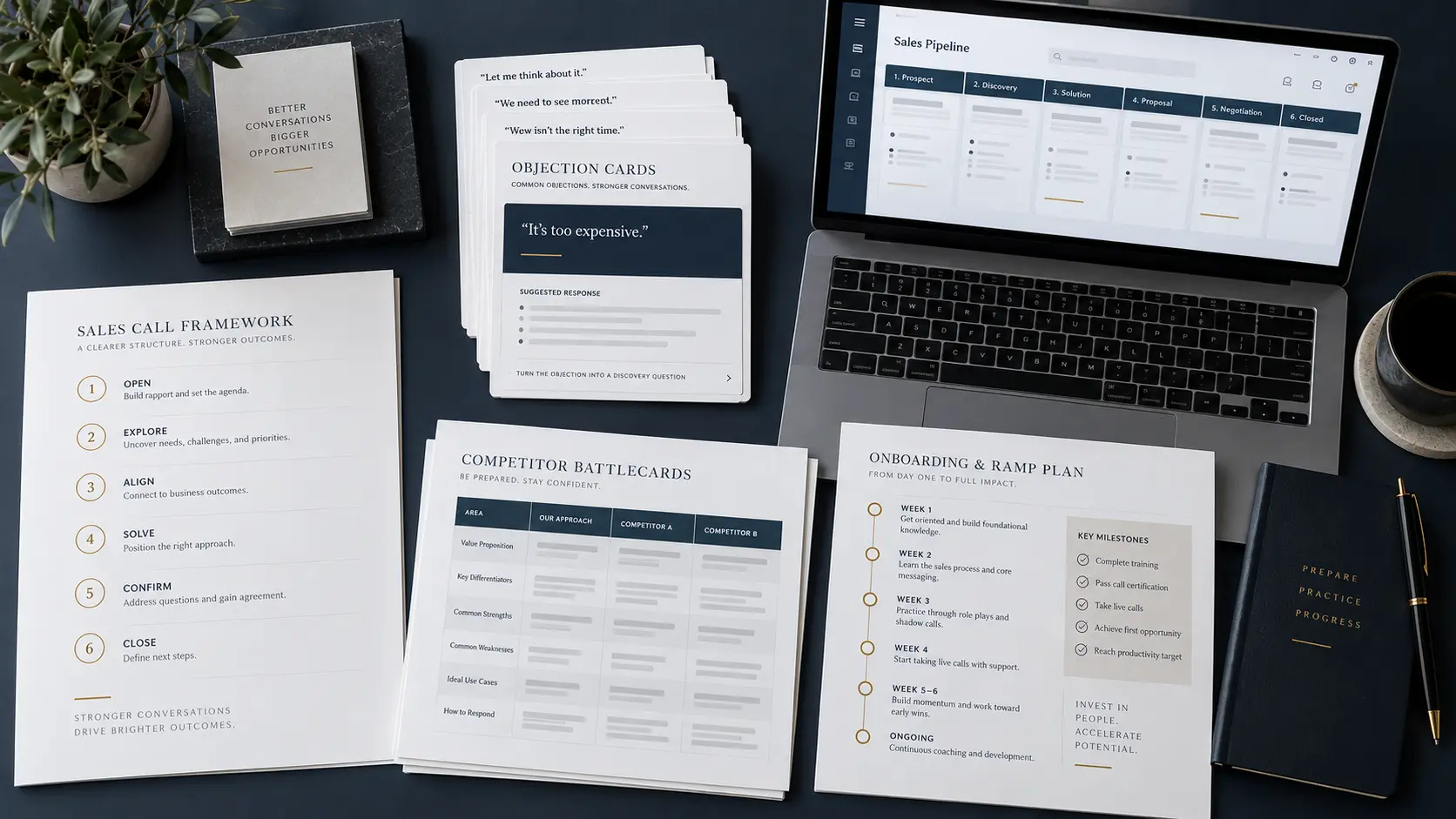
Every item above is yours to keep and to change. We would rather you rewrite a line next quarter than leave a stale one in place.
Examples of past work are available on request, so get in touch and we will send work relevant to your market.
The Assured Outreach Model
Most agencies agree a scope and hope the numbers follow. We agree the numbers first, in writing.
For enablement we set KPIs on what the work controls. Rep adoption, ramp milestones, and how consistently deals are qualified across the team.
We do not put a number on your revenue. Too much of that sits outside our hands, and a promise we cannot keep is worth nothing.
If the agreed KPIs are not met, we keep working at no extra service charge.
Common questions
Most B2B sales enablement work shows up in call quality first, from week five. Pipeline effects follow the length of your sales cycle, so a longer cycle means a longer wait.
We scope against team size, product count, and how much already exists. You get a fixed scope and a fixed fee in writing before we start. We do not publish rates, because no two of these projects are the same.
That is the real risk, and it is why the framework goes into the CRM rather than a shared folder. Reps follow what the deal record asks them for. We train the managers too, since adoption dies without call reviews.
Usually the library is fine and the story is missing. Files get made for marketing reasons, not for a question a buyer asked on a call. We start from the calls instead.
Call recordings, read access to the CRM, and time with two or three reps. If no recordings exist, we sit in on live calls instead. We sign your NDA before any of it.
The next step
One you won, one you lost, and one that stalled. We will come back with where the story broke and what we would change first.