Pipeline and stage design
We write what each stage means and what has to be true for a deal to leave it. Stages become tests a deal passes, not labels a rep picks.


Fit
This is for companies with more than one person selling and a CRM already in use.
The value comes from shared definitions, so there has to be more than one person to share them with. Four things tend to be true when the work is worth doing.
It pays off less when one founder still closes every deal. At that size a shared sheet is usually enough, and we will say so on the call.
We also do not sell this as a rescue for a team that needs more meetings. If the pipeline is thin rather than confused, outreach is the better place to spend the budget.
The situation
Few teams call this a RevOps problem. They call it a reporting problem, a CRM problem, or a sales problem.
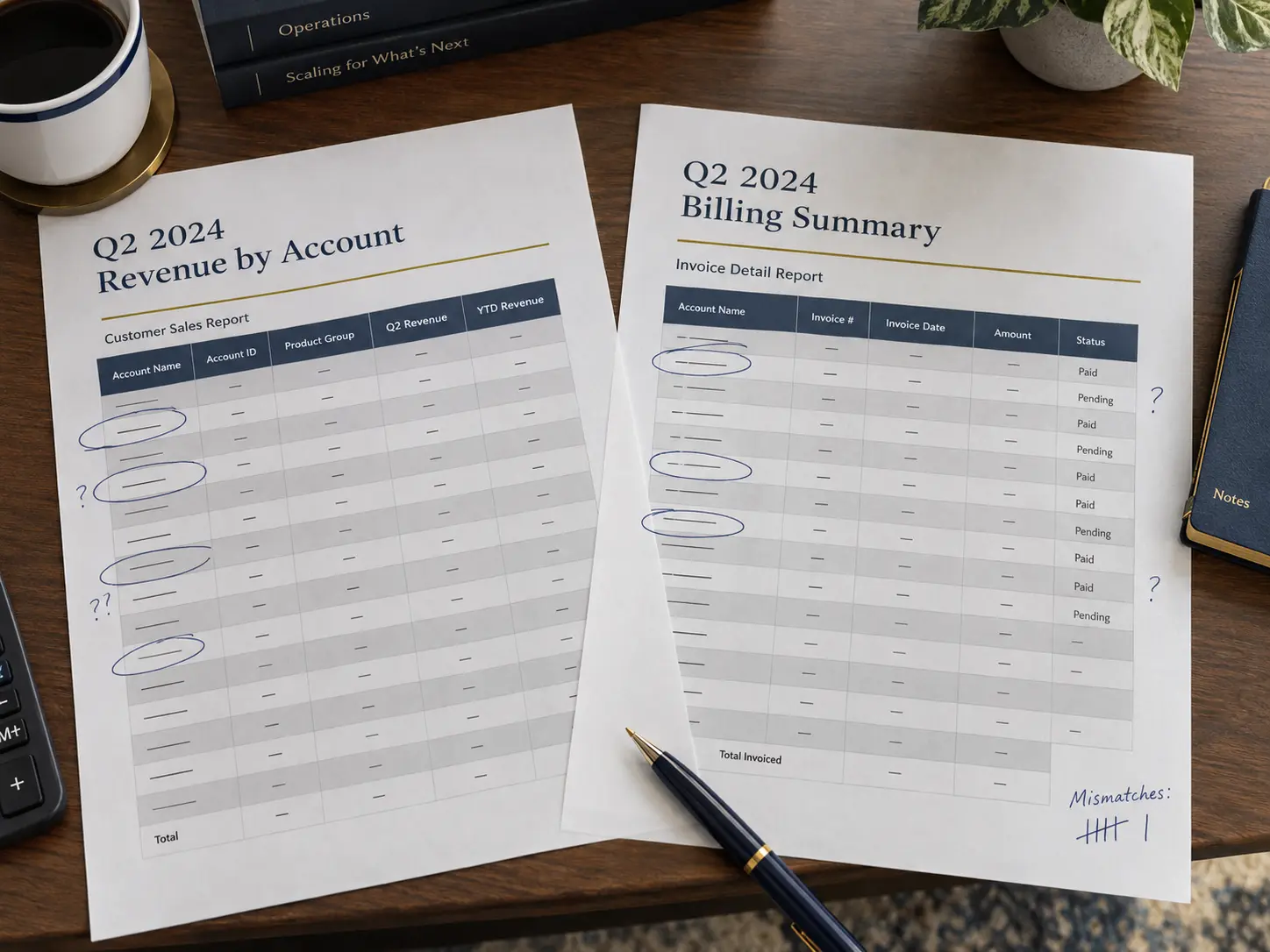
Sales reports one pipeline figure. Finance reports another. Both are pulled from the same week, from the same system.
Deals sit in a middle stage for months. Ask three people what moves a deal out of it and you get three answers.
The number comes from asking each rep how confident they feel. The miss gets explained after the quarter closes.
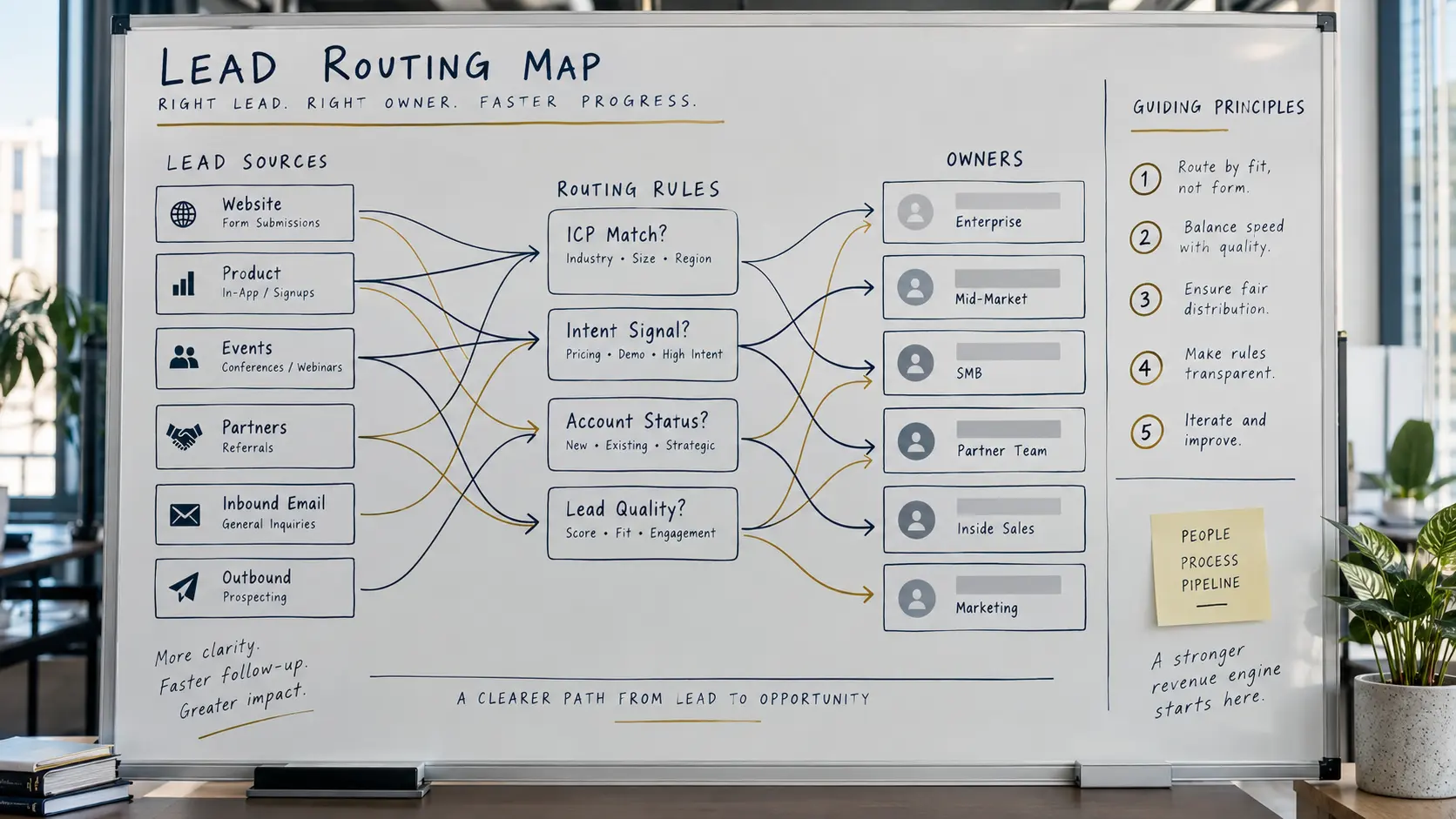
A form fills in on Tuesday. Someone calls on Friday, if it was clear whose job that was.
All four have the same root. The rules that govern the pipeline live in people's heads instead of in writing.
Scope of work
Six areas. Most revenue operations work needs all six, because fixing one in isolation rarely holds.
We write what each stage means and what has to be true for a deal to leave it. Stages become tests a deal passes, not labels a rep picks.
One written definition of a qualified lead, agreed by sales and marketing together. Then routing rules that give every lead a named owner the day it arrives.
We set the objects, fields and required entries your reporting depends on. Fields that feed no report get archived, so the record stays short enough to fill in.
One dashboard set that sales, marketing and finance read the same way. Every figure traces back to a field a person can open and check.
A forecast built on stage rules and deal age rather than optimism. Reps commit against written criteria, and the model shows the gap to target.
Marketing to sales, sales to delivery, and renewal back to sales. We map who owns the record at each point and which tool holds it.
Send us last month's pipeline report and we will tell you which questions it cannot answer.
Book a Strategy Call →The process
A build runs about eight weeks from audit to handover. The order matters more than the length.
We pull your pipeline history, field usage and current reports. You get a written list of what is broken and what each item is costing you.
Stage exit criteria, qualified lead rules and forecast categories, written down and agreed. Nothing gets built until sales and marketing sign the same page.
We configure the CRM, the routing and the dashboards inside your own instance. Old fields and reports get archived rather than deleted.
One short training session per team, run by the people who will use it daily. Every rule sits in a document they can open later.
A monthly session on the numbers, the aging deals and the rules that need changing. Optional, and priced separately from the build.
Deliverables
Documents and configuration you own outright, with nothing held in our accounts.
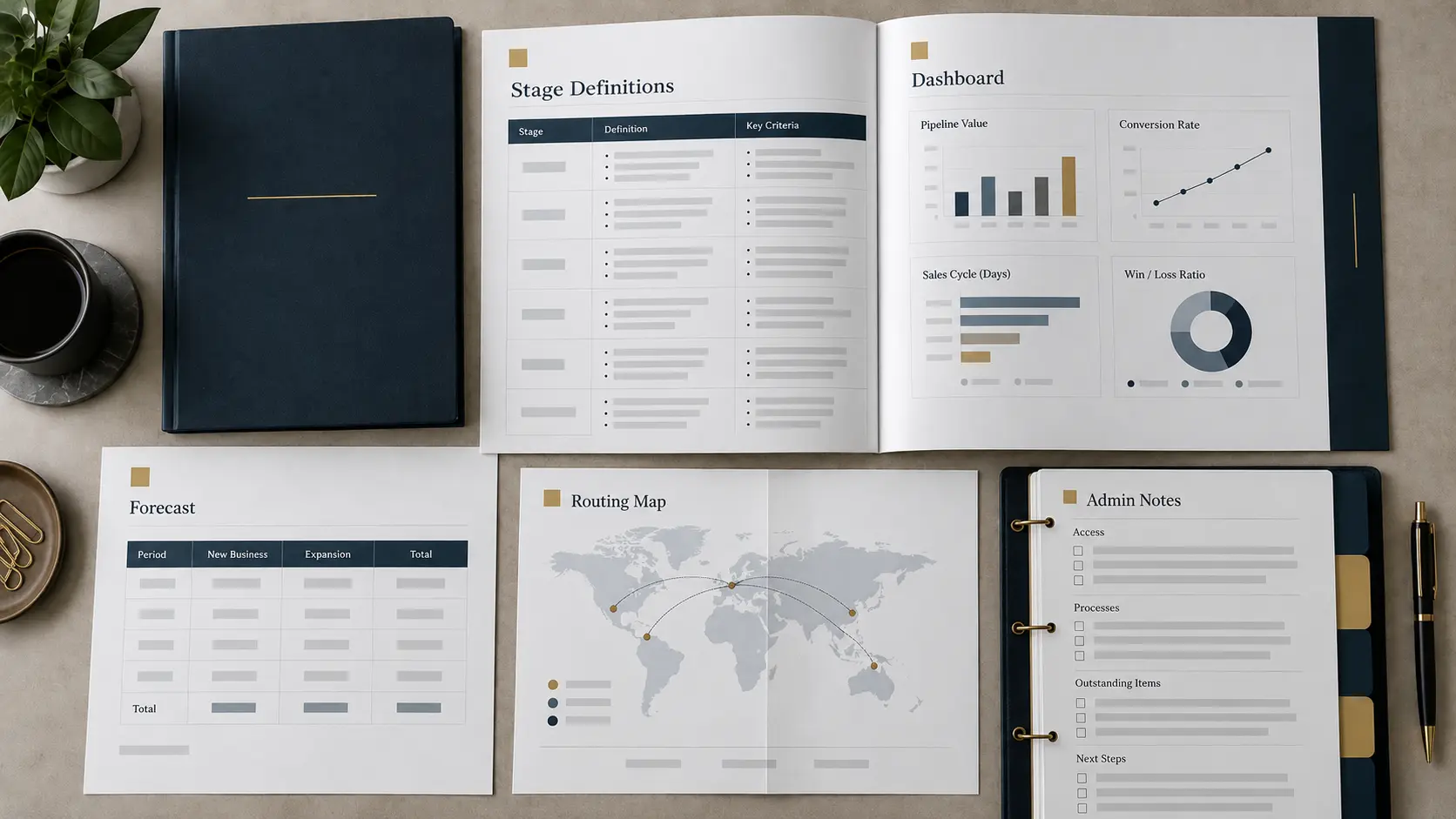
None of it sits behind our login. If you stop working with us, the system keeps running and your team keeps the manual.
Examples of past work are available on request, so get in touch and we will send work relevant to your market.
The Assured Outreach Model
RevOps work is easy to sell and hard to hold to account. This is how we make it accountable.
Before anything gets built, we agree in writing what the system has to do. That covers the KPIs, the definitions sitting behind them, and the date we will read them on.
If the agreed KPIs are not met, the work continues at no additional service charge.
The model covers what we control, which is the system, the definitions and the reporting. It does not cover a target set on numbers your team declines to enter.
Common questions
CRM maintenance keeps the data clean in a system that already works. Revenue operations decides how that system should work in the first place. Most teams need both, in that order.
No. We build inside the tool you already pay for, whichever one it is. If the tool is the real problem, we will say so and give you the reasons in writing.
Definitions are agreed in the first three weeks, and the arguments about the numbers usually stop there. Dashboards follow the build. Trend lines need a full quarter of clean entry behind them.
A few hours from whoever owns sales, marketing and the CRM. Most of that sits in the definitions stage, where the calls cannot be delegated to us. After rollout it drops to a monthly review.
Rules stick when they are short, written down, and checked in one weekly meeting. We build that review with you and sit in the first few. If a rule keeps getting skipped, it is usually the wrong rule.
The next step
Bring one pipeline report and one forecast. Half an hour is usually enough to find where they disagree, and to say whether this work is worth doing.